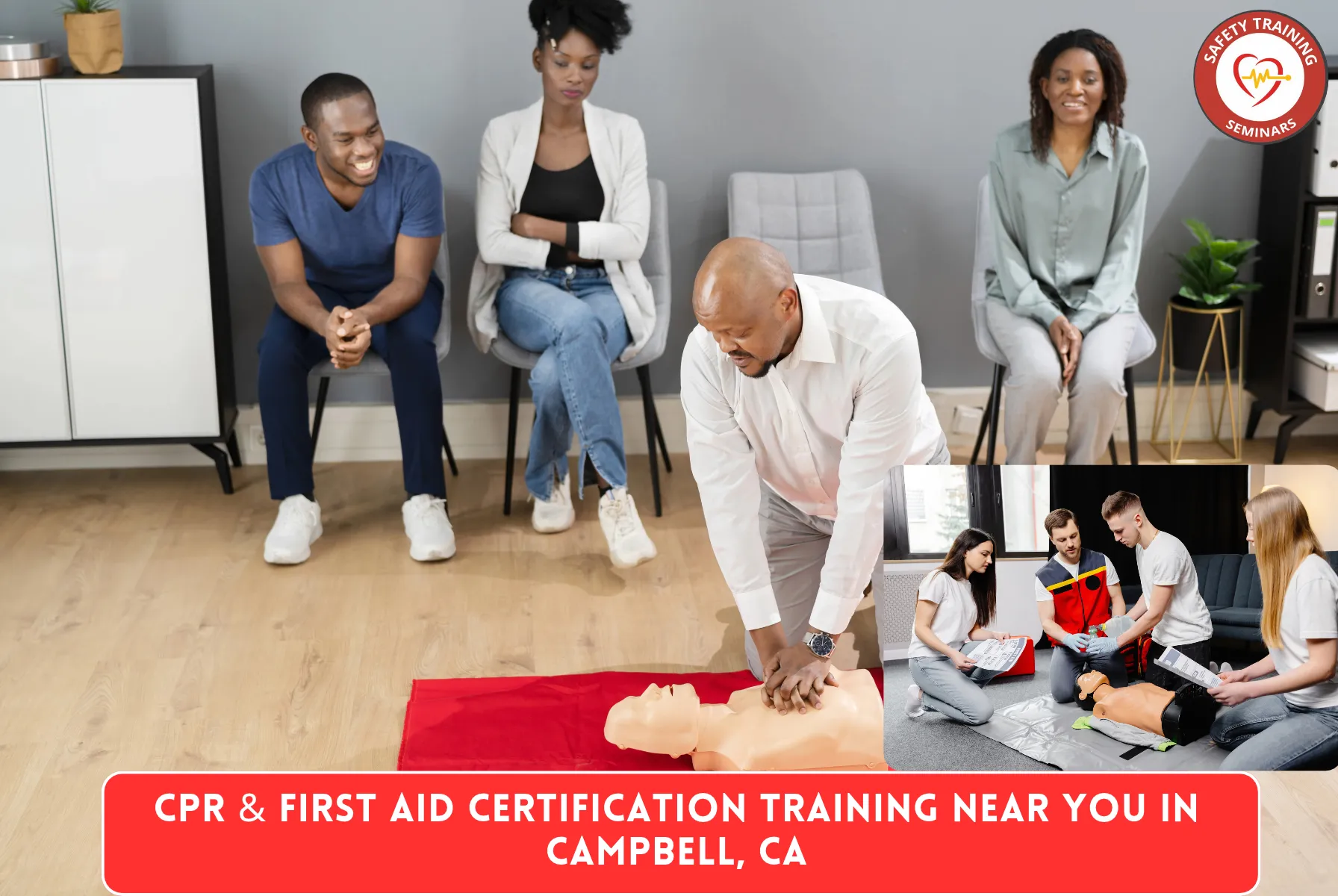
Finding a CPR and First Aid certification class in Campbell, California, is easier when you know which training program matches your personal, educational, or workplace requirements. Safety Training Seminars offers American Heart Association (AHA) CPR and First Aid training options at its Campbell training center, located at 125 E Sunnyoaks Avenue, Suite 111, Campbell, CA 95008.
Whether you are a parent, teacher, childcare provider, healthcare student, workplace employee, or community member, learning CPR and First Aid can help you prepare for unexpected medical emergencies. Before choosing a course, consider whether you need general CPR training, a combined CPR and First Aid program, or healthcare-provider Basic Life Support (BLS).
Where Can You Find CPR and First Aid Classes in Campbell, CA?
People searching for CPR and First Aid classes in Campbell can explore the local training options offered by Safety Training Seminars. The training center is situated at:
Safety Training Seminars: 125 E Sunnyoaks Avenue, Suite 111, Campbell, CA 95008
The Campbell location serves learners from nearby South Bay communities, including San Jose, Los Gatos, Saratoga, Santa Clara, and Cupertino. Its location provides another training option for people who want to complete their CPR and First Aid education without searching across the wider Silicon Valley area.
When comparing local training options, consider the course content, required hands-on practice, learning format, and completion documentation. A general CPR and First Aid course may not meet the same requirements as a healthcare-provider BLS program.
People traveling from surrounding communities should also verify the selected training location and registration details before scheduling their course.
What Does CPR and First Aid Training Cover?
CPR stands for cardiopulmonary resuscitation. It is an emergency response technique used when someone experiences cardiac arrest. First Aid involves providing immediate assistance to an injured or suddenly ill person while additional medical help is being arranged.
Depending on the selected American Heart Association program, CPR and First Aid training may cover several important skills.
1. Cardiopulmonary Resuscitation (CPR)
Participants learn how to recognize cardiac arrest and understand the importance of providing appropriate chest compressions. Courses may include adult CPR, with child and infant techniques covered according to the selected program.
2. Automated External Defibrillator (AED)
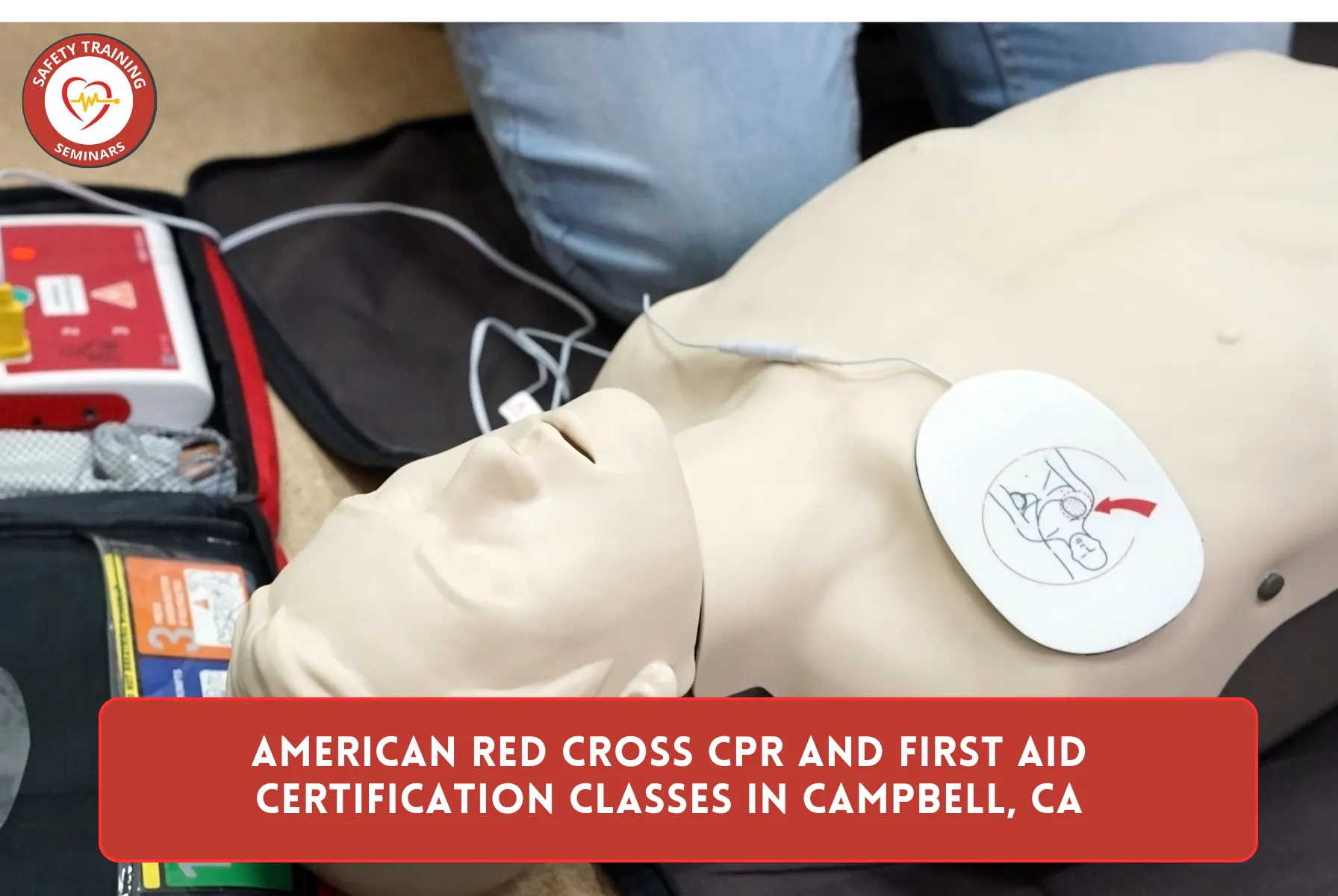
An AED is a portable device that analyzes heart rhythm and can deliver an electrical shock when appropriate. Training introduces learners to the proper use of an AED during a cardiac emergency.
3. First Aid for Common Injuries
First Aid education may address bleeding, wounds, burns, injuries, sudden illnesses, and other emergency situations. The specific topics depend on the course selected.
4. Choking Emergencies
Some programs teach participants how to recognize and respond to choking emergencies involving adults, children, and infants.
5. Medical and Environmental Emergencies
Depending on the course, learners may also study how to recognize medical emergencies, respond to environmental injuries, and understand when to activate emergency medical services.
Review the official course description before registration to confirm which skills and subjects are included.
CPR vs. CPR and First Aid vs. BLS: Which Training Do You Need?
Choosing the appropriate course depends on your occupation, responsibilities, and the requirements of your employer or educational institution.
| Course Type | Main Training Focus | Intended Audience |
| General CPR Training | CPR techniques and AED use | Community members and individuals interested in CPR |
| CPR and First Aid | CPR, AED, and First Aid response | Parents, teachers, caregivers, and workplace employees |
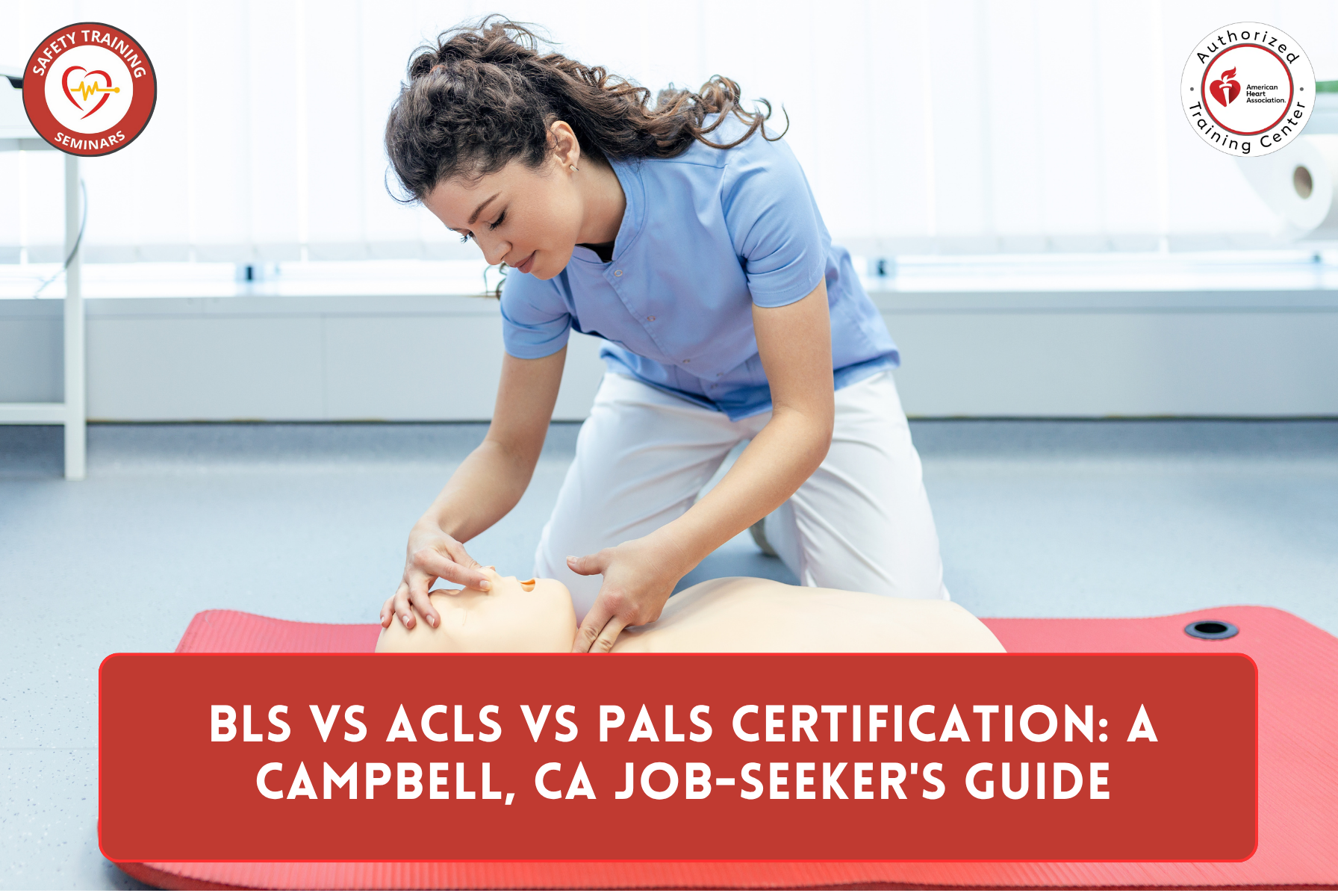
| Basic Life Support (BLS) | Healthcare-provider CPR, AED, ventilation, and team response | Healthcare professionals and qualifying healthcare students |
General CPR Training
General CPR training introduces participants to emergency response fundamentals, including recognizing cardiac arrest, performing CPR, and using an AED when included in the program.
It can be useful for people who want to develop CPR skills for personal preparedness or workplace responsibilities.
CPR and First Aid Training
The American Heart Association Heartsaver First Aid CPR AED course combines CPR, AED operation, and First Aid education. It is designed for individuals with little or no medical training who want to learn emergency response skills or need applicable course completion documentation.
Basic Life Support (BLS)
BLS is designed for healthcare professionals and other individuals whose responsibilities require healthcare-provider-level resuscitation training.
It covers CPR, AED use, ventilation, and coordinated responses to cardiac emergencies. Healthcare employees and students should confirm their specific BLS requirements before selecting a course.
Who Should Consider CPR and First Aid Training in Campbell?
CPR and First Aid education can benefit people working in different industries as well as individuals who want to develop practical emergency response skills.
Parents and Family Caregivers
Parents, guardians, babysitters, and family caregivers may benefit from learning how to respond to emergencies involving adults and children. People responsible for infants should consider a program that includes infant CPR and relevant pediatric First Aid topics.
Teachers and Childcare Providers
Teachers, daycare employees, preschool staff, and childcare professionals may encounter situations involving choking, injuries, or sudden medical emergencies. Appropriate training helps them understand emergency response procedures relevant to their responsibilities.
Healthcare Workers and Students
Nurses, medical assistants, EMTs, and nursing students may need BLS training rather than a general CPR and First Aid course. Students preparing for clinical placements should check their educational program’s requirements before registering.
Workplace Employees and Supervisors
Employees in offices, retail stores, warehouses, construction environments, and other workplaces may benefit from learning CPR and First Aid. Supervisors and workplace safety coordinators can also evaluate training options as part of their emergency preparedness planning.
Coaches and Fitness Professionals
Personal trainers, sports coaches, gym employees, and recreational program staff work in environments where physical activity and injuries can occur. Learning CPR and First Aid can help them prepare for potential emergencies.
Community Members
People who want to become more prepared to assist family members, friends, coworkers, or others in their community can also consider an appropriate CPR and First Aid course.
The best course depends on individual responsibilities and the requirements established by the relevant employer, school, or organization.
Why Local CPR and First Aid Training Matters in Campbell
Campbell is part of Silicon Valley’s South Bay community, surrounded by residential neighborhoods, educational institutions, businesses, healthcare services, and recreational facilities. These environments create different reasons for individuals to pursue CPR and First Aid education.
For example, employees working in local businesses may need training that aligns with workplace emergency response policies. Parents and childcare providers may be more interested in programs covering pediatric emergencies, while healthcare students may need BLS training for their educational or clinical requirements.
Nearby communities also contribute to the demand for accessible training options. San Jose, Los Gatos, Saratoga, Santa Clara, and Cupertino are among the communities connected to Campbell’s wider educational and employment environment.
West Valley College in Saratoga serves students and communities including Campbell, Los Gatos, and San Jose. Students exploring healthcare-related educational pathways should check whether their programs require general CPR training, First Aid, or healthcare-provider BLS.
For residents and professionals throughout the South Bay, choosing a local training center can make it easier to plan learning around work, education, and family commitments.
How to Choose the Right CPR and First Aid Class
Before enrolling in a CPR and First Aid certification course, consider these important factors:
- Course purpose: Determine whether you need CPR-only training, combined CPR and First Aid, pediatric training, or healthcare-provider BLS.
- Age groups covered: Check whether adult, child, and infant CPR are included when relevant to your responsibilities.
- AED training: Confirm whether AED operation is part of the selected program.
- First Aid topics: Review the medical emergencies, injuries, and response techniques covered.
- Employer requirements: Ask your employer whether the selected course meets its specific training requirements.
- Educational requirements: Students should confirm the required course with their school or clinical placement.
- Learning format: Review whether the program involves classroom learning, online coursework, hands-on practice, or a combination.
- Completion documentation: Check whether successful completion provides the applicable AHA Course Completion eCard.
- Registration details: Verify the location, schedule, fees, prerequisites, and course requirements before paying.
Taking time to compare these details can help you select a program that matches your actual needs.
CPR and First Aid Training Options from Safety Training Seminars
Safety Training Seminars provides American Heart Association training options at its Campbell location for individuals seeking general emergency response education and healthcare-related training.
Available course options listed for the Campbell location include:
Heartsaver First Aid CPR AED
This program combines CPR, AED use, and First Aid education for people with little or no medical training.
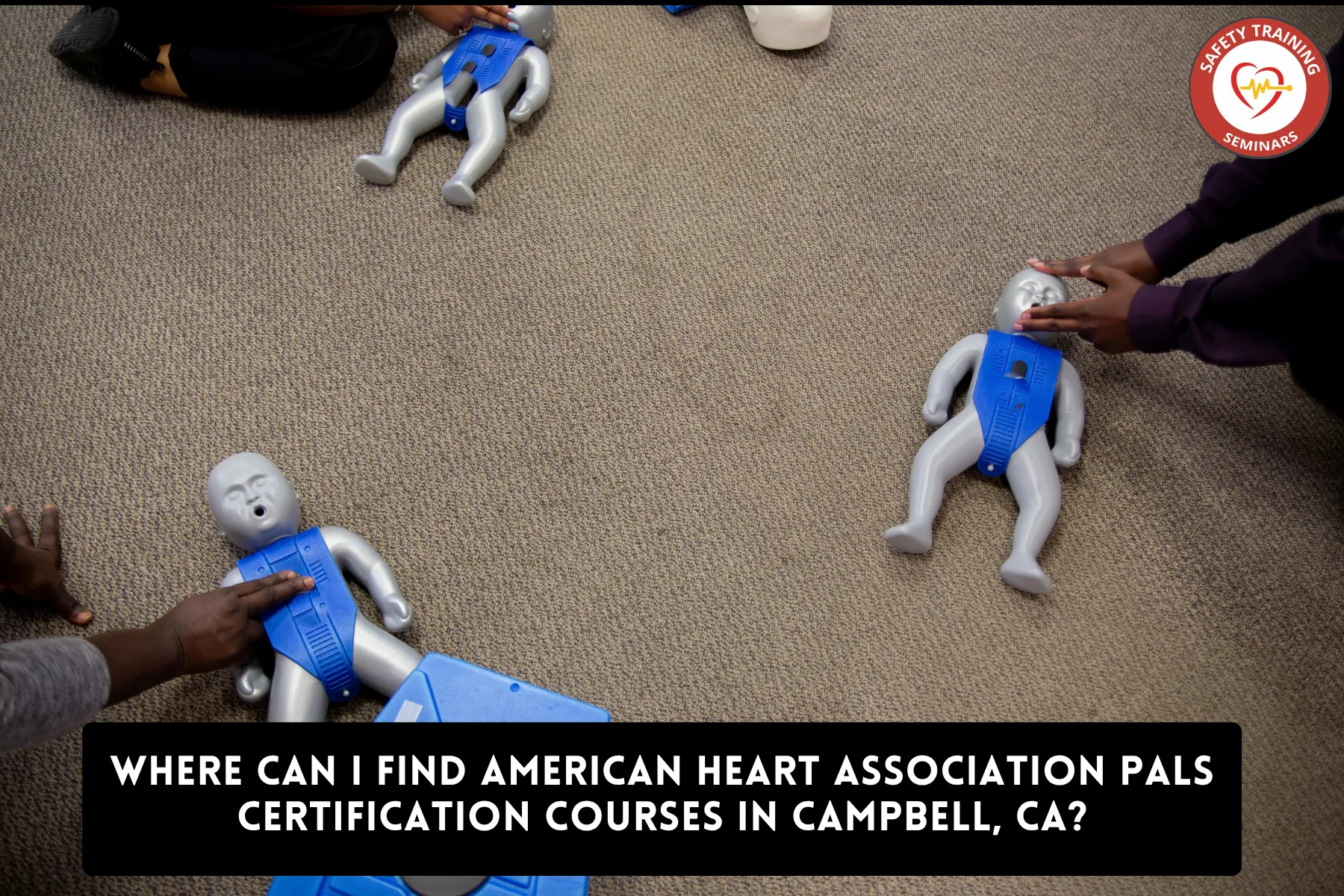
Pediatric First Aid CPR AED
This course focuses on emergency response involving children and is relevant to people with childcare and pediatric responsibilities.
Basic Life Support (BLS)
BLS is intended for healthcare professionals and other learners who require healthcare-provider-level resuscitation training.
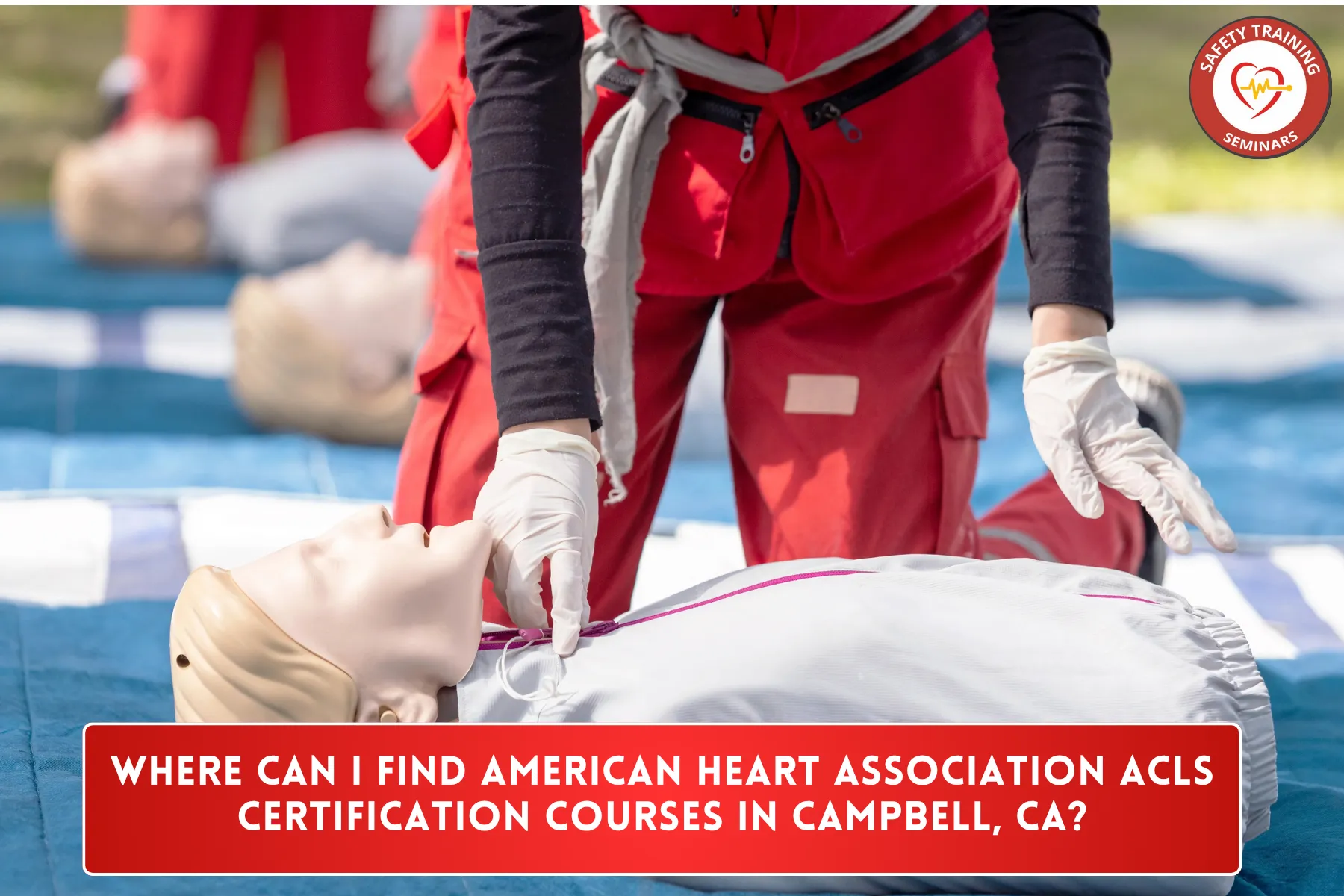
Advanced Cardiovascular Life Support (ACLS)
ACLS provides advanced training for appropriate healthcare professionals involved in responding to cardiovascular emergencies.
Pediatric Advanced Life Support (PALS)
PALS focuses on advanced pediatric emergency response and is intended for healthcare professionals whose responsibilities involve managing pediatric emergencies.
Course availability, learning formats, and completion requirements can differ between programs. Some applicable AHA Heartsaver courses offer Self-Guided Learning™ options that combine online learning with in-person skills practice. Confirm the specific learning pathway available for your selected Campbell course.
Upon successfully completing all applicable course requirements, participants receive the corresponding AHA Course Completion eCard where provided by the selected program.
How to Register for a CPR and First Aid Class in Campbell
Once you identify the training you need, follow these steps to prepare for registration:
- Identify your training requirements: Determine whether you need CPR, First Aid, pediatric training, or healthcare-provider BLS.
- Review the course description: Check the included topics, learning format, and practical skills requirements.
- Choose the Campbell location: Confirm the training address at 125 E Sunnyoaks Avenue, Suite 111, Campbell, CA 95008.
- Check registration information: Review available dates, fees, prerequisites, and course details.
- Complete the registration process: Follow the official enrollment instructions for the selected program.
- Prepare for course completion: Review any required learning materials and understand the skills practice or assessments involved.
If your employer or school requires a specific AHA course, confirm that requirement before making a payment.
You can also review the available CPR and First Aid certification classes in Campbell to compare the local training options.
Frequently Asked Questions About CPR and First Aid Classes in Campbell, CA
1. Where can I find a CPR and First Aid certification class in Campbell, CA?
Safety Training Seminars offers CPR and First Aid training options at 125 E Sunnyoaks Avenue, Suite 111, Campbell, CA 95008. Prospective learners can review the available course descriptions and registration information to identify a program that matches their requirements.
2. What is included in a CPR and First Aid course?
A combined CPR and First Aid program may cover adult CPR, AED operation, choking response, and First Aid for common injuries and medical emergencies. Specific topics, including child and infant CPR, depend on the selected course.
3. Who should take CPR and First Aid training?
Parents, teachers, childcare professionals, workplace employees, coaches, caregivers, and community members may benefit from CPR and First Aid education. Healthcare professionals should check whether their responsibilities require BLS instead.
4. Is BLS different from a general CPR and First Aid course?
Yes. BLS focuses on healthcare-provider-level resuscitation skills, including CPR, AED use, ventilation, and team response. General CPR and First Aid courses are designed for a broader audience and do not automatically meet BLS requirements.
5. Does CPR and First Aid training include infant CPR?
Some programs offer infant CPR as part of their course content or through additional pediatric modules. Check the official description of the selected program to confirm whether infant and child CPR skills are included.
6. What do students receive after completing an AHA course?
Students who successfully meet the requirements of an applicable American Heart Association program receive the corresponding course completion documentation, generally an AHA Course Completion eCard. The specific documentation depends on the course selected.
Find the Right CPR and First Aid Training in Campbell
Selecting the right CPR and First Aid course starts with understanding your responsibilities and the skills you want to develop. Whether you are a parent, teacher, childcare provider, workplace employee, or healthcare student, make sure the training program matches your educational, professional, or personal requirements.
Safety Training Seminars provides local American Heart Association training options at 125 E Sunnyoaks Avenue, Suite 111, Campbell, CA 95008, serving learners from Campbell and surrounding South Bay communities.
Explore the available CPR and First Aid training options in Campbell, CA, review the course information, and choose the program that best fits your needs.